Moon Water, Confirmed

moon-water

The biggest factor hanging over human settlement of other worlds is the question of water. We need it to drink, we need it to cultivate food, we need it for fuel (indeed, we need it for the first lunar microbrewery); pretty much every human activity requires water. Supplies of water could be ferried from Earth to the Moon, but that would be prohibitively expensive and ultimately futile. For us to live on the Moon or further afield, H2O needs to already be there.

Ever since the Apollo lunar landings when samples of rock were transported to Earth we’ve been searching for the mere hint of this life-giving molecule. There have been indications that the lunar regolith may indeed contain trace amounts of the stuff, but on the whole, scientific endeavour has yet to return evidence of any large supply of water that could sustain a colony.

Until today.

Up until now, scientists haven’t been able to seriously entertain the thought of water on or near the surface of the Moon, apart from in the depths of the darkest impact craters. However, data from the recently deceased Indian Chandrayaan-1 mission has supported data taken by the Cassini probe (when it flew past the Moon in 1999 on its way to Saturn) and NASA’s Deep Impact probe (which made several infrared observations of the lunar surface during Earth-Moon flybys on its way to the 2010 rendezvous with Comet 103P/Hartley 2). Both Cassini and Deep Impact found the signature of water and hydroxyl, and now, a NASA instrument on board Chandrayaan-1 reinforces these earlier findings.

The NASA-built Moon Mineralogy Mapper (M3) on board the Indian satellite detected wavelengths of light reflected off the surface that indicated hydrogen and oxygen molecules. This is convincing evidence that water is either at, or near, the lunar surface. As with the previous measurements, the water signal gets stronger nearer the lunar poles.

So what does this mean for the future of manned space exploration? Although water has been detected, this doesn’t mean there are huge icy lakes for us to pitch a Moon base and pump out the water. In actuality, the signal indicates water, but there is less water than what is found in the sand of the Earth’s deserts (you can pack away the drinking straws now).

It’s still pretty damn dry, drier than anything we have here. But we’ve found this dynamic, ongoing process and the moon was supposedly dead,” University of Maryland senior research scientist Jessica Sunshine told Discovery News. “This is a real paradigm shift.”

If there are widespread water deposits (despite the low concentrations), even in regions constantly bathed in sunlight, there is huge potential for water deposits in those mysterious, frozen craters. Interestingly, these measurements indicate that the water may not have just been deposited there by comets; the interaction between the solar wind and the existing lunar mineralogy could be a mechanism by which lunar ice is constantly being formed.

Every place on the moon, at some point during the lunar day, though not necessarily at all times, has water and OH [hydroxyl],” Sunshine said.

We may see self-sufficient lunar colonies yet. But the saying “getting blood out of a stone” should probably be replaced with “getting water out of the lunar regolith”

Next up is NASA’s LCROSS mission that is scheduled to impact a crater in the south pole on October 9th. Analysis from the impact plume will supplement this positive Chandrayaan-1 result, hopefully revealing yet more water in this frozen region.

Sources: Discovery News, Space.com, Times.co.uk

A Visor Filled With Awesomeness

The space station as reflected in John "Danny" Olivas' spacesuit visor on September 3, 2009 (NASA)
The space station as reflected in John “Danny” Olivas’ spacesuit visor on September 3, 2009 (NASA)

When I came across this image in NASA’s Human Space Flight gallery, I stopped. I was looking for the “perfect” shuttle image during the STS-128 mission to the International Space Station earlier this month, but I got sucked into browsing through the hundreds of EVA photographs NASA has stockpiled in their archives.

This particular scene was taken by NASA astronaut John “Danny” Olivas when he was out on a spacewalk installing a new Ammonia Tank Assembly. The EVA was over six hours long and Olivas was able to do some digital photography in that time. This picture shows his spacesuit helmet visor, with a reflection of the camera at arms length below.

Also visible in the reflections in the visor are various components of the station and European Space Agency astronaut Christer Fuglesang, mission specialist, anchored to a Canadarm2 mobile foot restraint. —NASA

The reflection captures so much detail. The curvature of the Earth can be seen in the distance, with space station solar arrays jutting in front. Even the two docked Soyuz vehicles (TMA-14 and TMA-15) are in shot. To top it all off, ESA astronaut Fuglesang is dangling in the vacuum of space attached to a robotic arm.

Quite simply, awesome.

There’s a Fractal in My Brazilian Rainforest

Lago Erepecu and Rio Trombetas, Brazil (NASA)

The shapes of fractals appear in nature all the time, but when I saw this Earth Observatory image from the International Space Station, I thought I was looking at a zoomed-in portion of the famous Mandelbrot set graphic. This picture wasn’t formed by the calculations of a computer, however. This is what nature does when chaos comes out to play.

Imaged from orbit on August 25, 2009, an astronaut was able to get the timing just right with his/her Nikon D2Xs digital camera (plus 180 mm lens) so that sunlight was reflecting off Brazil’s Lago (Lake) Erepecu and Rio (River) Trombetas. Usually, water masses in the Brazilian Rainforest are too dark to be picked out in any detail, so this sunglint was very useful to pick out the fine detail of the waterways.

Source: Earth Observatory Program

Confirmed: Stony Ridge Observatory Survived the Station Fire

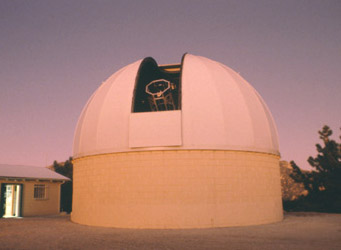
Stony Ridge Observatory

There is some good news coming out of the ashes of the horrendous Station Fire that continues to burn some parts of LA County: Stony Ridge Observatory is safe.

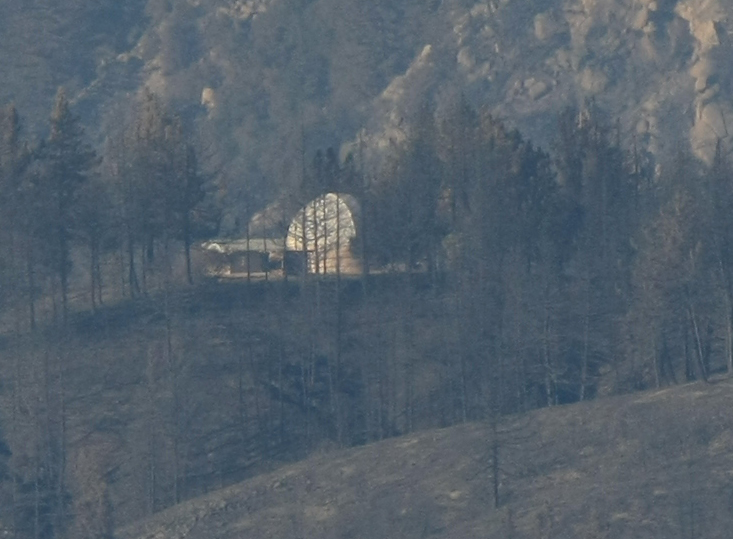
The observatory, located approximately 5 miles north east of the larger Mt. Wilson Observatory, was built and is run by amateur astronomers. Also, the site is a lot smaller, meaning the single observatory dome couldn’t receive the same amount of fire fighting attention as the historic Mt. Wilson site. Fortunately, it would appear the 30-inch Newtonian-Cassegrain telescope is safe inside it’s domed home.

Last week, the Stony Ridge webmaster kindly left this message on Astroengine:

The Stony Ridge Observatory from Mt. Wilson. Credit: Dave Jurasevich, Mt. Wilson Observatory Superintendent

“For those of you who have expressed your support for Stony Ridge Observatory — thank you! As you can imagine, it’s been a stressful time for all of us, and we very much appreciate all the kind thoughts and expressions of support we’ve received. Although we’ve not been able to look inside the buildings yet, it appears at least from the outside that Stony Ridge has been spared damage but will require extensive cleanup. Keep checking the website every so often. More info/photos will be posted there as we get them.”Kay Meyer, Stony Ridge Observatory webmaster

Tonight, Pam Sable, a member of the Stony Ridge Observatory, sent me a message confirming that the site was safe. However, the wildfire has left its mark.

“Our site is in what used to be, a lovely forest only 50 minutes from my home in Glendale, which itself is an area only 20 minutes from Downtown L.A. Once in the Angeles Forest, all the sights and sounds of the city are gone. The damage to the forest is very sad but at least it will return in time. Yet if Stony Ridge had been destroyed, it would have been irreplaceable by today’s costs. We are very, very fortunate.” –Pam Sable, Stony Ridge Observatory astronomer.

Indeed, the fire is still burning. Unfortunately, fire fighters are hurrying to extinguish the blaze as hot weather is forecast for the next week. There’s also the spectre of the Santa Ana winds that could cause some complications.

War of the Worlds Google Doodle Celebrates H.G. Wells’ Birthday

hgwells09

Today is H.G. Wells’ birthday! And I must admit, the Google logo is pretty cool. A UFO and a couple of tripods (with more in the distance) rampaging through the sleepy rural village of Horsell in Surrey is depicted. This relates to last week’s Google Doodle of crop circles and tweeted map reference to the same village near the town of Woking where H.G. Wells lived and wrote the famous War of the Worlds novel.

In my first post about the doodle, I followed the trail as far as H.G. Wells’ birthday, although last week it wasn’t Wells’ birthday. But the clues were there for something to happen today and it has. Even the logo’s filename is unambiguous: “hgwells09.gif”

So no puzzle this time, just a celebration of a legendary writer who imagined the first ever sci-fi Martian invasion in Surrey. If there’s a deeper puzzle behind this doodle, I don’t see it.

Happy 143rd birthday H.G.!

UPDATE: Google has confirmed the above, but mentions nothing about the War of the Worlds arcade game. It looks like there may have been too much lateral thinking going on that night…

Say Hello To My Little Friend: The Atom, Imaged

atom_photo

I am fascinated with outer space, this is true. But if you stop to think about it, the inner space between the atoms is just as awe-inspiring as the vast distances separating the planets, stars and galaxies. In actuality the volume inside an hydrogen atom is essentially empty; the single electron “orbits” (if we consider the simple Bohr model of the atom) the central proton at a huge distance. It’s analogous to a quantum star system, where a planet orbits its parent star, hundreds of millions of miles away.

However, atoms aren’t as simple as Niels Bohr’s famous model (although Bohr’s model is none-the-less important as it always has been). The electrons occupy a cloud, rather than specific orbits, and the electron’s position cannot be defined as a point, more a statistically defined volume. As dictated by quantum theory these clouds vibrate at certain frequencies, depending on the electron energy. These electron energies are analogous to the simple electron “shells” physicists refer to in the textbooks; each progressively higher shell occupying a higher energy state. In reality, in the slightly fuzzy quantum world, the frequency of electron oscillation increases with energy.

Examples of electron atomic and molecular orbitals. The "lobes" are representative of the electron clouds surrounding the nuclei
Examples of electron atomic and molecular orbitals. The lobes are representative of the electron clouds surrounding the nuclei (source)

When I was in university, I loved seeing the different modes of electron energy in 3D visualizations of the atom (pictured right). Lobes of electron clouds vibrating at different energies seemed to make sense. But now, for the first time, the clearest photographs of a single atom have been taken, with lobes of electron clouds — as predicted by quantum theory — intact.

This research soon to be published in the journal Physical Review B, demonstrates detailed images of a single carbon atom’s electron cloud (pictured top). Taken by Ukrainian researchers at the Kharkov Institute for Physics and Technology in Kharkov, Ukraine, these images clearly show the electron cloud in two energy states.

This amazing feat was accomplished using a field-emission electron microscope. Although this microscope has aided physicists since the 1930’s to image the vanishingly small, the Ukrainian researchers have developed a new way of making the tool so sensitive, single atoms can be imaged. After arranging a ridged chain of carbon atoms (only tens of atoms long) inside a vacuum chamber, the researchers passed 425 volts through the atoms. At the tip of the chain, the end carbon atom emitted its electrons and a surrounding phosphor screen captured an image. This image was of the electron cloud surrounding the single carbon atom.

Up until this point, field emitting microscopes have only been able to resolve the arrangement of atoms in a sample. This is the first time physicists have been able to see the structure of an electron cloud around an atom.

It’s always nice to validate a bedrock physics theory with photographic evidence, it’s exciting to think what the Kharkov Institute scientists will do next…

Source: Insidescience.org

Google Crop Circle Doodle: A Celebration of Vector Graphics and H. G. Wells’ Birthday?

A screenshot of the 1982 colour version of the arcade game (via klov.com)

Thanks to an eagle eyed Astroengine.com reader, we may have an answer to the current Google doodle conundrum. Having spent a lot of last night following the mystery trail from crop circles, to Woking, to War of the Worlds, to H. G. Wells… I was stuck. The only thing that made this time of the year special was the fact that it’s H. G. Wells’ 143rd birthday on Monday.

For the complete background, check out last night’s post.

However, in keeping with Google’s previous tribute to the classic computer game Zero Wing, could this new puzzle relate to another game? StockbrdigeT thinks this might be the case:

Today’s clue is co-ordinates that only have significance in their relation to War of the Worlds. Today is also what appears to be the 30th anniversary of the release of the War of the World Arcade game (the original monochrome version, not the 1983 color version).

So I had a look around, and indeed there was a (very rare) War of the Worlds arcade game released in 1979. There was a colour follow-up version in 1982 as well (a screenshot is shown above). From Wikipedia:

The War of the Worlds is an arcade game based on the H. G. Wells novel The War of the Worlds. There were two versions of this game, identical in gameplay but differing in graphics. The first version was released by Cinematronics in 1979, and featured black and white vector graphics. A color version was later made in 1982.

The War of the Worlds arcade game, developed by the pioneering company Cinematronics, was one of the first games to use vector graphics (the very first Cinematronics game to use vector graphics was Space Wars, released in 1977).

goog_e

So, what has this got to do with the Google doodle? Remember I was trying to find an explanation for the missing “l”? In actuality, the “l” in “Google” isn’t missing (as pointed out by another commenter, jurl), it’s there, but it’s in the process of being drawn by the little combine harvester in the crop.

I think that the Google logo is a celebration of one of the first uses of vector graphics in computer games — the “l” represents a vector being drawn by graphics software (i.e. the combine harvester).

So, the best I can do is the doodle is a celebration of:

  • H. G. Wells’ birthday on September 21st.
  • the 30th anniversary of the release of the War of the Worlds arcade game.
  • the first uses of vector graphics in computer games.

If that’s not it, I give up!

The Google Logo, H. G. Wells’ Birthday and the War of the Worlds Invasion Site

goog_e

UPDATE: For an update, check out my follow-up post: Google Crop Circle Doodle: A Celebration of Vector Graphics and H. G. Wells’ Birthday?

OK, so now I’m hooked. This evening, the Google logo changed into a doodle of a crop circle (above). This may seem a little innocuous, after all, Google is always jazzing up their logo with celebratory bits of art. But what did this resemble?

For starters, this isn’t the first time this has happened. A couple of weeks ago, another mini brain-teaser was posted with a flying saucer “beaming up” one of the “o”s in Google. CNET blogger Chris Matyszczyk managed to follow the clues and deduced that the missing “o” could be found in the numerical clue of one of @Google’s tweets. The numbers related to letters in the alphabet and spelled out, “All your O are belong to us.” This was in reference to the classic game Zero Wing (creator of the now famous gamer war cry “All your base are belong to us). It was the computer game’s 20th anniversary.

The logo was explained, the missing “o” was explained and it all related to an event (i.e. the Zero Wing anniversary).

So now we are presented with another conundrum. What does it mean? We have crop circles (linking to the search query “crop circles“, thanks @astrobio74 for pointing that out), a missing “l” in “Google” this time…. and a tweet from @Google with the map co-ordinates: 51.327629, -0.5616088.

Typing the longitude and latitude into Google Maps takes us to a location in Woking, Surrey, UK. The exact address is on Woodham Road in a village/town called Horsell.

Doing a search for the exact address and digging around the houses turned up precious little, until I typed in “Horsell” into Google. In the results is Horsell’s Wikipedia page. Horsell was made famous as being the place where Martians invaded in H. G. Wells’ classic sci-fi novel, War of the Worlds.

Jumping over to the War of the Worlds Wikipedia page, more information unfolds:

Much of the The War of the Worlds takes place around Woking and nearby suburbs. The initial landing site of the Martian invasion force, Horsell Common, was an open area close to Wells’ home. In the preface to the Atlantic edition of the novel, he wrote of his pleasure in riding a bicycle around the area, and imagining the destruction of cottages and houses he saw, by the Martian heat-ray or the red weed.

Great, so I’m almost 100% certain this little Google treasure hunt is pointing to War of the Worlds in some way. But why would Google pick today to do this?

A little more digging into H. G. Wells himself points to a possible answer (although I’m not totally convinced this is the sole reason). Next Monday marks the 143rd birthday of H. G. Wells (on 21 September, 1866). 143 years doesn’t strike me as a significant number, but the trail seems to lead here.

I’m now trying to work out where the “l” in “Google” fits into all this…

Space Junk: It’s Not As Bad As It Looks (what?)

space-junk-geo-02

According to NASA, these new images of space junk orbiting Earth make the situation look more dire than it really is.

I suppose that would be like a store manager looking at the shop floor of Toys ‘R’ Us on the day after Thanksgiving rubbing his chin and saying, “You see, I told you it would be quiet.” In actuality, the shop would be rammed full of bargain hunters, and by the looks of things, Earth orbit (from LEO to geostationary altitudes) is rammed full of junk.

But space is big, so although it might look a little grim up there, it’s very unlikely a spaceship will collide with anything. A statement from NASA agrees:

The dots are not to scale, and space is a very big place. Collisions between large objects are fairly rare. The orbit of each piece is well known. If any debris comes into the path of an operating NASA satellite, flight controllers will maneuver the satellite out of harm’s way.

This may be the case, but I would argue that as a space-faring race, us humans have barely dipped our toes in the cosmos yet. It’s going to take a lot more rocket launches and space littering before we can have routine access to space. If it looks like this now, in the first decade of the 21st century, how much junk is going to be up there in 20, 50 or 100 years time when manned space flight is commonplace?

We’re already manoeuvring satellites, shuttles and space stations out of harms way, and occasionally satellites do collide. Unfortunately, I think space junk will be an additional man made hazard for space travel; we’ll just have to deal with it.

But for now, be sure to pack your double-glazed Whipple Shield if you intend to take a trip into low-Earth orbit

Source: Space.com

Off The Record: Time Stands Still for The Daily Galaxy

Oh peachy! I was having a browse through the blogs just now and I stumbled across an interestingly titled article called New Theory Nixes “Dark Energy”: Says Time is Disappearing from the Universe. This is going to be good! I mused.

I really enjoy the Dark Energy debate. On so many levels, invoking Dark Energy as a possible answer to the rapid expansion of the Universe in the infinitesimally short moments after the Big Bang seems like a logical notion. There has to be a force acting in the reverse to gravity, it’s the only way we can explain how our Universe is expanding now.

However, like the Pluto debate, there’s a lot of anger in the opposing wings. The reasons why the IAU would choose to demote the dinky plutoid seems like planetary blasphemy to many (although, personally, the IAU could call Pluto an asteroid and I doubt my blood would boil too much). Mention Dark Energy, and you can expect the “that’s not science, that’s nonsense!” argument to echo too.

Dark Energy, in all honesty, is a tough theory to argue, but cosmologists have formulated this theory based on a collection of evidence from a range of sources. Until a better idea comes around, Dark Energy will remain as some invisible force that’s messing with our cosmos.

But hold on, what’s this article about time disappearing? There IS an alternative theory, and The Daily Galaxy has the scoop! Let’s have a read.

Oh… but what’s this? There’s no links to external sources… oh yes there is, they’re at the bottom — not hyperlinked, just printed. OK, no biggie, would be nice to link to the source material you are using, but hey, we can’t all be the world’s best bloggers can we.

Hmmm… that’s strange. Two of the referenced sources are over two years old, and the other no longer exists. In fact, I remember this research, I read about it ages ago. This isn’t new research. In fact, this isn’t a new article, it is an exact copy of an article written by Rebecca Sato, posted by The Daily Galaxy on January 3rd, 2008: Is Time Literally Slowing Down and Disappearing From the Universe?

So basically, The Daily Galaxy is recycling its own articles. Why? I’m not too sure, but I’m thinking the Dark Energy debate is still pretty lively; it’s no bad thing to be publishing articles about this subject around now. And there was me thinking The Daily Galaxy was a reputable source of science writing that doesn’t stoop to misleading tricks to boost traffic–

Hold on, they’ve done this before. Oh, and againand again.

Please, not again!

In actuality, this is a new twist on an old technique used by the site to squeeze as much traffic out of the web as possible. In the past, they’ve re-published old articles as “Daily Galaxy Classics.” Obviously that didn’t work, so now they pretend that old news is just as good as new news (and their audience won’t notice). Genius.

If you read The Daily Galaxy, check their sources. Also, do the famous teacher-plagiarism-Google trick on each of the Daily Galaxy articles you see (copying and pasting a section of text — paragraph-length — into Google). If it’s a unique article, you’ll just have that article indexed. If not, you’ll see that article, plus an old Daily Galaxy article (from the “archives”) and every other site that linked back to the old article.

I’m sorry Daily Galaxy, but misleading your own readers just ain’t cricket.